September marks Children’s Good Manners Month, a good nudge to focus on something concrete and practical: the everyday etiquette that helps young children move through the world with a little more ease, at the table, in stores, and with other kids.
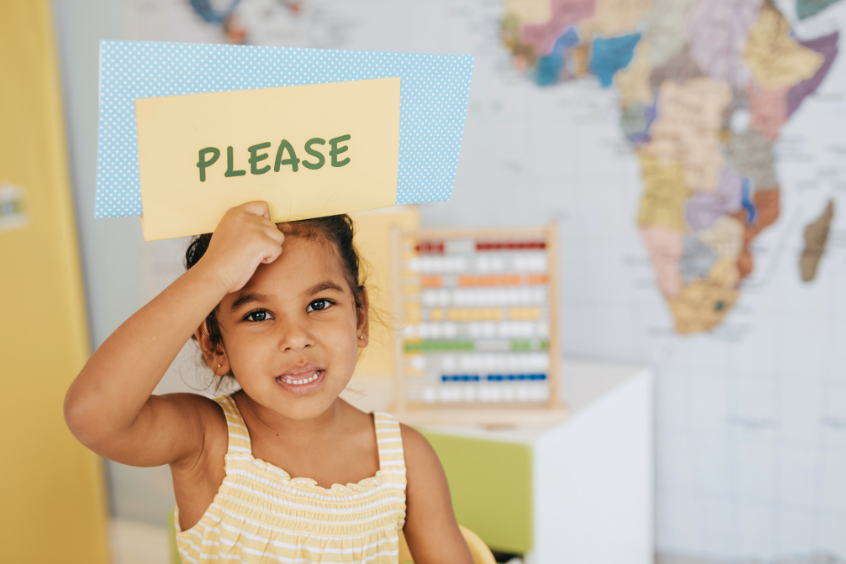
Everyday Manners Worth Teaching Early
A handful of basics go a long way at this age.
- Saying please and thank you without a reminder every time
- Waiting for a turn to speak instead of interrupting
- Greeting people with a simple hello or wave
- Saying excuse me when interrupting or passing by
- Asking before taking something that belongs to someone else
These small habits, repeated often enough, eventually become automatic.
Modeling Matters More Than Reminders
Preschoolers learn manners far more from what they see than from what they’re told. A parent who says thank you to a cashier or holds the door for someone teaches more in that moment than a dozen reminders could. Consistency from the adults around a child matters just as much as any direct instruction.
Table Manners, Simplified
Mealtime is one of the easiest places to practice etiquette naturally. Staying seated, using utensils reasonably well, and asking to be excused before leaving the table are all reasonable expectations for a preschooler. None of this needs to be perfect. A few consistent expectations, repeated calmly at every meal, tend to stick better than strict rules enforced occasionally.
Manners in Public
At Stores and Restaurants
Practicing an indoor voice, waiting patiently in line, and using polite words with strangers all transfer well from home to public spaces. A quick reminder before walking in often helps more than a correction once you’re already there.
Around Other Children
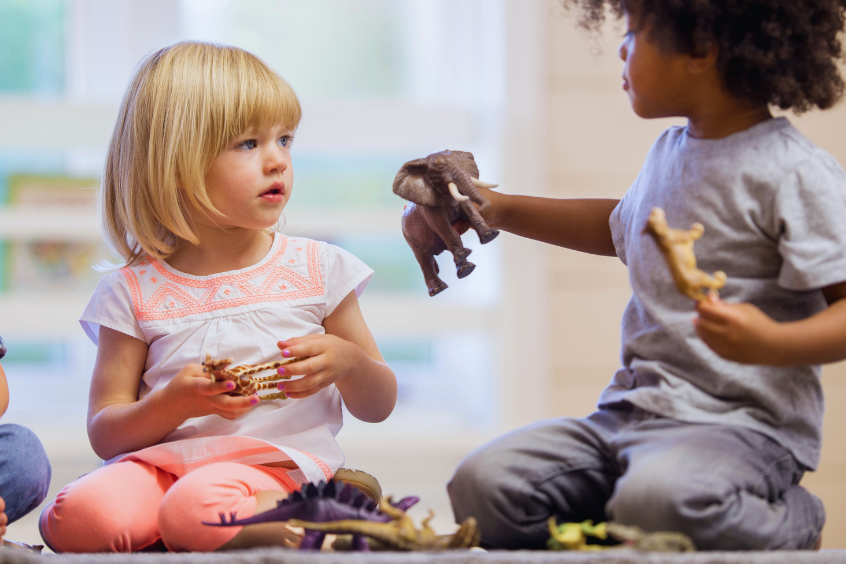
Sharing, taking turns, and using kind words during play are all forms of manners too, not just formal politeness. These habits tend to make playtime smoother and reduce the number of small conflicts that come up.
FAQs
At what age should I start teaching manners?
Around age two or three, children can begin learning simple habits like please and thank you, with consistent modeling.
My child forgets to say please most of the time. Is that normal?
Very normal. Gentle, consistent reminders work better than frustration, and it does click eventually with repetition.
How can I reinforce manners without constant correction?
Model the behavior yourself, and praise it specifically when you notice your child using good manners on their own.
Key Takeaways
- A handful of consistent habits, like please and thank you, go a long way.
- Children learn manners more from watching than from being told.
- Table manners are easiest to build through repetition at every meal.
- Public manners transfer well when practiced calmly and consistently at home.
Good manners are part of the everyday rhythm we build into our classrooms at Abundant Blessings CDC, the same way they’re part of a steady routine like a family dinner at home or getting ready for a new preschool routine. Want to see how we build these habits day to day in our programs? Contact our team to learn more.
The Abundant Blessings Child Development Center
📍 1005 E Blackstock Rd Moore, SC 29369
📞 (864) 574-0910
📧 abundantblessings1005@gmail.com
🌐 abundantblessingscdc.org