The word “STEM” (Science, Technology, Engineering, and Math) sounds intimidating, doesn’t it? It conjures images of complex robotics labs or advanced physics, making us think we need fancy gadgets to help our kids succeed.
Here’s a secret: You absolutely don’t!
Early STEM learning isn’t about memorizing equations; it’s about problem-solving, curiosity, and critical thinking. It starts simply, with basic exploration and play. Every time your child asks “Why?” or tries to build the tallest tower, they are practicing STEM.
At Abundant Blessings CDC, we integrate science and math into everyday play, and you can easily do the same thing at home with items you already have!
1. The Engineering Challenge (Playdough to Towers)
You don’t need expensive blocks to teach engineering concepts like structure, balance, and stability.
- The Materials: Playdough, dry spaghetti noodles (or toothpicks), and small items like pompoms or mini marshmallows.
- The Challenge: Ask your child to build the tallest tower that can hold a small item (like a plastic toy). They will quickly discover that spaghetti alone is too wobbly, but if they use playdough as a connector and a base (creating triangles and squares), the structure becomes stable. They just learned a core engineering principle!
- The Learning: This teaches planning, spatial reasoning, and the concept of a strong base.
2. Kitchen Chemistry (Science in the Sink)
Your kitchen is a perfect laboratory for preschoolers! Simple reactions teach concepts like observation, cause, and effect.
- The Materials: Baking soda, white vinegar, a few drops of food coloring, and a measuring cup.
- The Challenge: Mix a small amount of baking soda with water in a cup. Have your child add a drop of food coloring. Then, let them add the vinegar (a few drops at a time) and watch the fizzing chemical reaction!
- The Learning: This teaches reaction, measurement, and the difference between solids (baking soda) and liquids (vinegar). Ask them: “What happens if we use less vinegar? More baking soda?”
3. Backyard Math & Data Collection (Technology-Free Math)
Math is everywhere, especially outside! Use nature to practice counting, sorting, and comparison—early data collection skills.
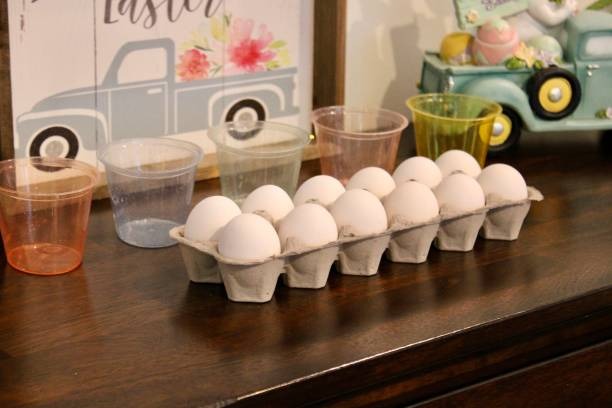
- The Materials: A muffin tin or an egg carton.
- The Challenge: Go on a “Nature Hunt.” Ask your child to sort items they find (leaves, rocks, twigs) into the muffin tin compartments. Challenge them to find “5 green leaves” and “2 bumpy rocks.”
- The Learning: This teaches counting (one-to-one correspondence), sorting by attribute (color, texture), and simple data skills (“We have more leaves than rocks!”).
Remember, you are your child’s first and best teacher. By turning simple playtime into opportunities for critical thinking, you are laying the groundwork for complex concepts down the road. Every time they solve a playdough problem or watch the vinegar fizz, they are building confidence and curiosity—the real foundation of future programmers, engineers, and scientists.
At Abundant Blessings CDC, we make sure that learning these critical STEM skills is always fun, hands-on, and developmentally appropriate. We are dedicated to providing the quality care that leads to a brighter future.
Ready to see our learning environment in action? Call us today to schedule a tour!
📍 Abundant Blessings CDC
🏠 1005 E Blackstock Rd Moore, SC 29369
📞 (864) 574-0910
📧 abundantblessings1005@gmail.com